
As aesthetic professionals, few things are more disheartening than a client returning for a follow-up session and saying, “I don’t think it’s working.” When you are using high-quality equipment and following standard protocols, hearing that laser hair removal is not working can be confusing.
However, when dealing with stubborn regrowth, the culprit is often internal rather than external. At Heshibi, we understand that hormonal fluctuations—specifically conditions like Polycystic Ovary Syndrome (PCOS)—present unique challenges for clinics.
In this guide, we will explore the science behind hormonal resistance and how utilizing Heshibi’s advanced multi-wavelength technology can help you turn these difficult cases into success stories.
Understanding Hormonal Hair Growth
To explain to your clients why their results differ from the norm, we must first understand the biological engine driving the hair.
The Root Causes: PCOS and Androgens
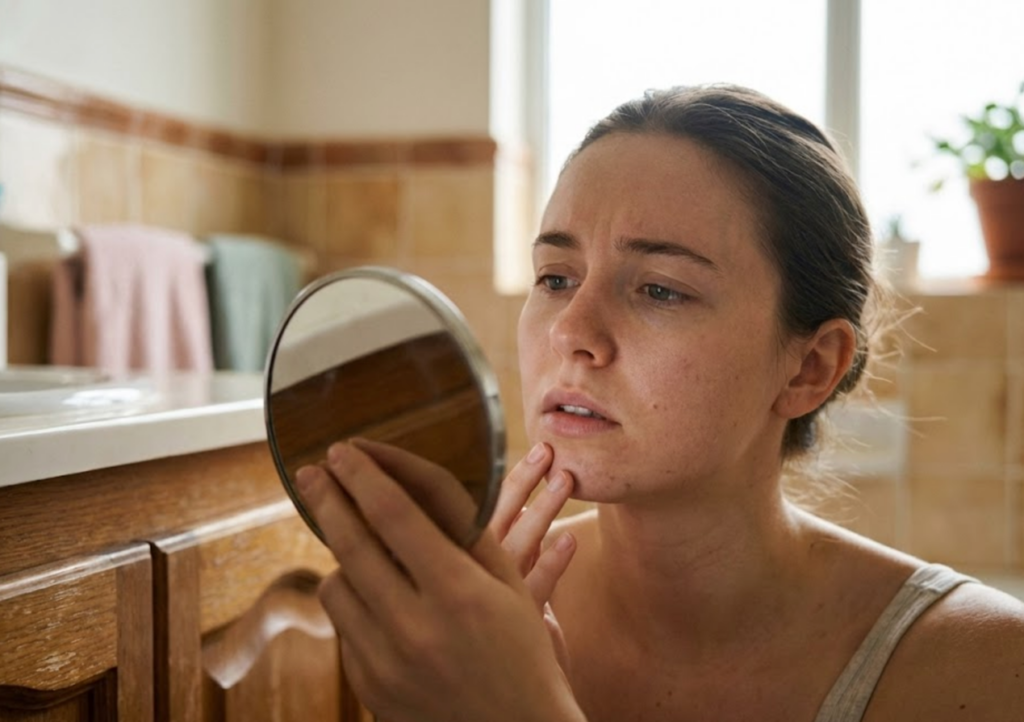
Hormonal hair growth, or hirsutism, is primarily driven by an imbalance in androgens (male hormones) in females. The most common driver is PCOS, a condition affecting 6% to 12% of women. Elevated androgen levels cause vellus hair to transform into terminal hair—making it darker, coarser, and more visible. Thyroid imbalances can also play a significant role.
How Hormones Disrupt the Cycle
Effective laser treatment relies on catching the hair follicle in the Anagen (active growth) phase. However, growth hormone and hair growth cycles are intrinsically linked. Androgens can accelerate the growth phase or wake up dormant follicles that were previously inactive.
If a patient’s hormones are fluctuating, their hair cycles may become erratic. This means that at any given appointment, fewer hairs might be in the vulnerable Anagen phase compared to a typical client, rendering the laser pulse less effective for that specific session.
Why Laser Hair Removal May Be Less Effective
When a client presents with hormonal imbalances, standard expectations often don’t apply. Recognizing the signs early can help you manage the treatment plan.
Signs Laser Hair Removal Is Not Working
The most obvious signs that laser hair removal is not working as expected include:
- Rapid Regrowth: Hair reappears fully just weeks after a session, rather than the usual sparse, slow regrowth.
- Patchy Resistance: Certain areas (typically the chin, jawline, or neck) show no reduction in density despite high energy settings.
The Role of Hormonal Fluctuations
Fluctuations caused by the menstrual cycle, pregnancy, or unmanaged PCOS can stimulate new growth in follicles that were previously treated or dormant. While PCOS laser treatments effectively reduce hair, these clients face a biological “uphill battle.” The body is actively trying to regenerate the hair you are trying to destroy.
Clinical Strategies for Managing Hormonal Hair Growth
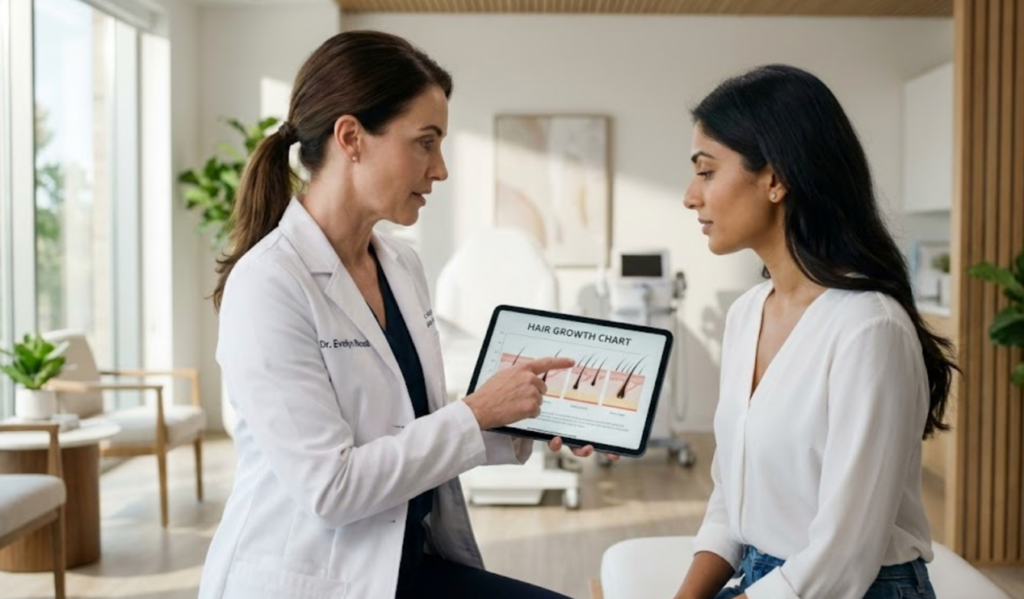
For clinics, the key to success is not just better firing techniques, but better overall case management.
1. Adjusting Protocols
Standard intervals may need adjustment. Experienced practitioners often use progressive energy delivery—gradually increasing the fluence as the hair thins out—to target the follicle more aggressively without damaging the skin.
In clinical scenarios, we often see that PCOS patients require a dedicated long-term plan. While the FDA approves laser for permanent hair reduction, “permanent” for a PCOS patient means consistent management. A successful protocol typically involves an initial intense phase (at least six sessions) followed by scheduled maintenance every 3 to 4 months.
2. Medical Coordination
Laser hair removal targets the symptom (the hair), not the cause (the hormones). It is vital to coordinate with endocrinologists or dermatologists. Clients taking anti-androgens (like spironolactone) or oral contraceptives alongside their PCOS laser treatments often see significantly better results than those using laser alone.
3. Setting Realistic Expectations
Transparency builds trust. We recommend informing patients with hormonal imbalances that they will likely require:
- More sessions than the average client (often 8–12 rather than 6).
- Ongoing maintenance treatments to manage new growth.
How Heshibi’s Technology Helps Clinics Handle Complex Cases
When fighting hormonal hair growth, the margin for error is slim. You need equipment that delivers power, precision, and consistency. This is where Heshibi’s OEM/ODM solutions empower clinics to treat even the most resistant cases.
Multi-Wavelength Precision
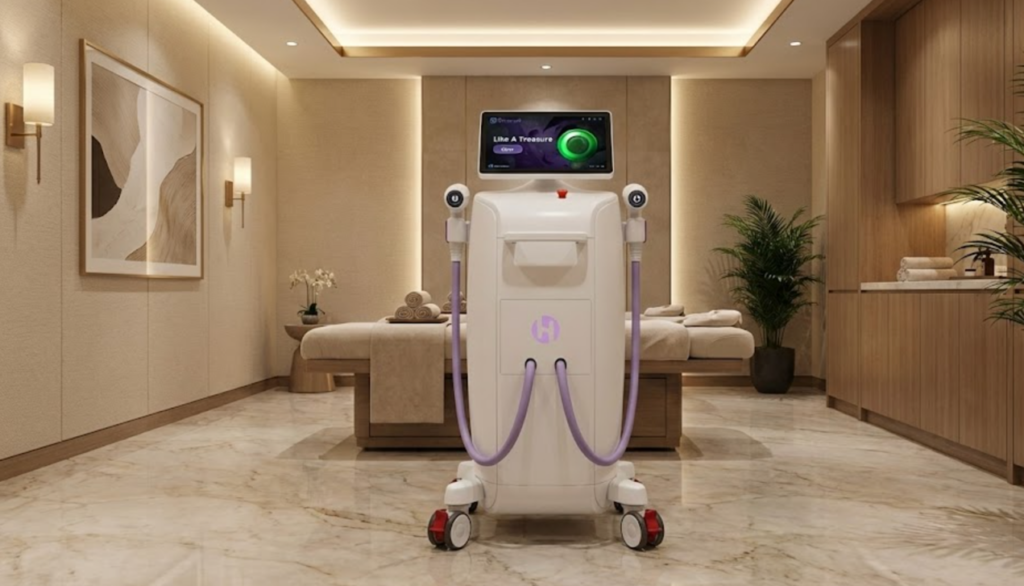
Hormonal hair varies in depth and texture. A single wavelength is often insufficient. Heshibi’s flagship technologies, such as the DioGemini and DioTreasure, utilize multi-wavelength diode laser systems (755nm, 808nm, 940nm, and 1064nm) to target hair at every level:
- 755nm: Targets the bulge of the hair follicle; ideal for lighter, finer hair often found on the face.
- 808nm: The “Gold Standard” for diode lasers, offering deep penetration to target the bulb of coarse, dark hair.
- 940nm: coagulates the microvasculature around the follicle, cutting off the nutrient supply—a crucial step for inhibiting regeneration in hormonal cases. It is also safer for darker skin tones.
- 1064nm: The safest choice for dark or tanned skin, ensuring deep penetration without epidermal damage.
Consistent Power for Resistant Hair
To disable a hormonally charged follicle, you need consistent energy.
- High Power: Heshibi devices like the DioFlex and DioGemini offer robust power options ranging from 1200W to 3000W.
- Stability: The DioGemini features dual handles with independent power output, allowing you to switch settings instantly between face and body areas.
- Durability: Our DioTreasure model utilizes high-quality Coherent laser bars from the USA, rated for 20 million shots. This ensures that the 1000th shot is as powerful as the first, preventing the energy drop-off that causes treatments to fail.
Patient Comfort
Hormonal areas (like the face) are sensitive. Heshibi integrates advanced TEC or Compressor cooling systems (available in DioGemini and DioFlex). This keeps the skin surface cool, minimizing pain and allowing practitioners to use the higher energy levels required to treat resistant follicles safely.
Conclusion
Hormonal hair growth is challenging, but it is not untreatable. When laser hair removal is not working, it is usually a sign that the strategy needs to evolve.
By combining medical insights, realistic patient expectations, and Heshibi’s high-power, multi-wavelength technology, your clinic can offer a solution that truly works. With tools like the DioGemini and DioTreasure, you aren’t just removing hair; you are restoring confidence.
Are you looking to upgrade your clinic’s capabilities for treating complex cases? Contact the Heshibi team today to learn more about our OEM/ODM laser solutions.