
In the fast-paced world of aesthetic medicine, technology moves quickly. In Heshibi Tech, I often remind our partners: while technology is the engine of your business, laser hair removal regulations are the steering wheel that keeps you on the road.
In today’s market, compliance is more than just a shield against risk; it is a tool for growth. Educated patients now demand proof of safety. When you can confidently demonstrate that your equipment meets global medical device regulations, you aren’t just checking a box—you are building the long-term trust and brand loyalty that defines a successful clinic.
Here is exactly what you need to know to ensure your equipment is legitimate, safe, and compliant.
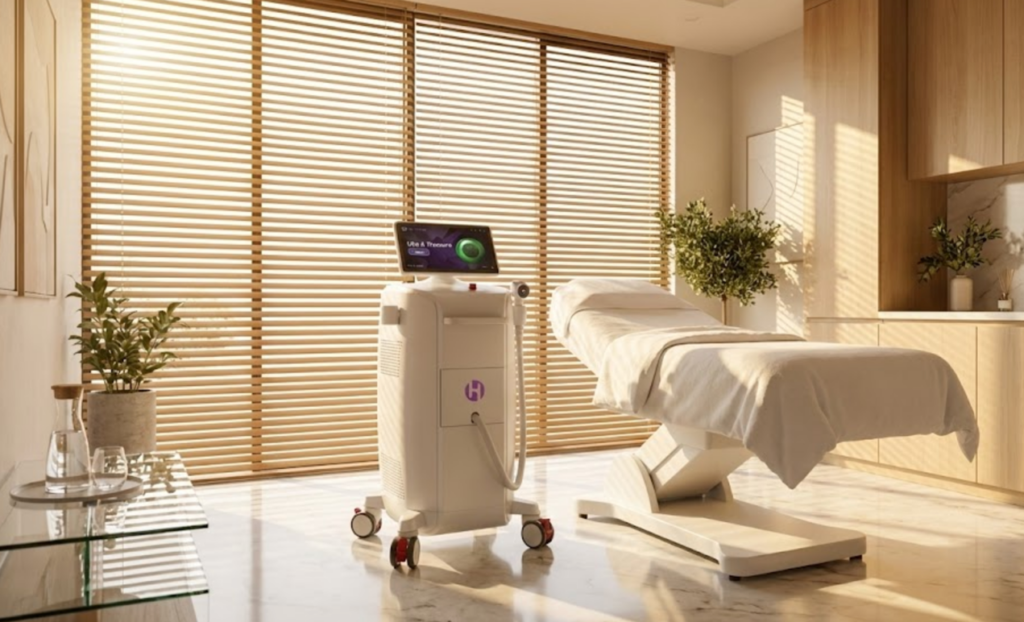
Overview of Major Regulatory Bodies
Navigating the alphabet soup of regulatory bodies is the first step in due diligence. Here is how the major markets differ.
1. FDA Approval vs. FDA Clearance (U.S.)
One of the most common questions we receive is: Is laser hair removal FDA approved?
The answer requires nuance. Laser hair removal devices are generally Class II medical devices. Therefore, they typically receive FDA Clearance, not FDA Approval.
- FDA approval is reserved for high-risk devices (like heart valves) or new drugs requiring extensive clinical trials.
- FDA Clearance (510(k))means the manufacturer has proven the device is “substantially equivalent” to a legally marketed device already on the market.
At Heshibi Tech, our laser hair removal devices—including the DioGemini, DioTreasure, and DioFlex—are FDA Cleared. Be wary of suppliers claiming “FDA Approval” for standard diode lasers; this often indicates a lack of regulatory understanding or misleading marketing.
2. CE Marking (EU)
For our partners in Europe, the CE Mark is the passport for market entry. This is governed by the stringent Medical Device Regulation (MDR) (EU) 2017/745. The MDR requires manufacturers to classify devices based on inherent risk (often upgrading lasers from Class I to Class IIa/IIb) and demands rigorous clinical evaluation and post-market surveillance.
3. CFDA/NMPA (China) and ISO Standards
In China, the National Medical Products Administration (NMPA, formerly CFDA) sets the bar. Specifically, devices must meet standard GB9706.222—2022, which dictates safety requirements for laser equipment used in medical treatments. Compliance with these standards, alongside ISO certifications, ensures the device meets global benchmarks for quality management.
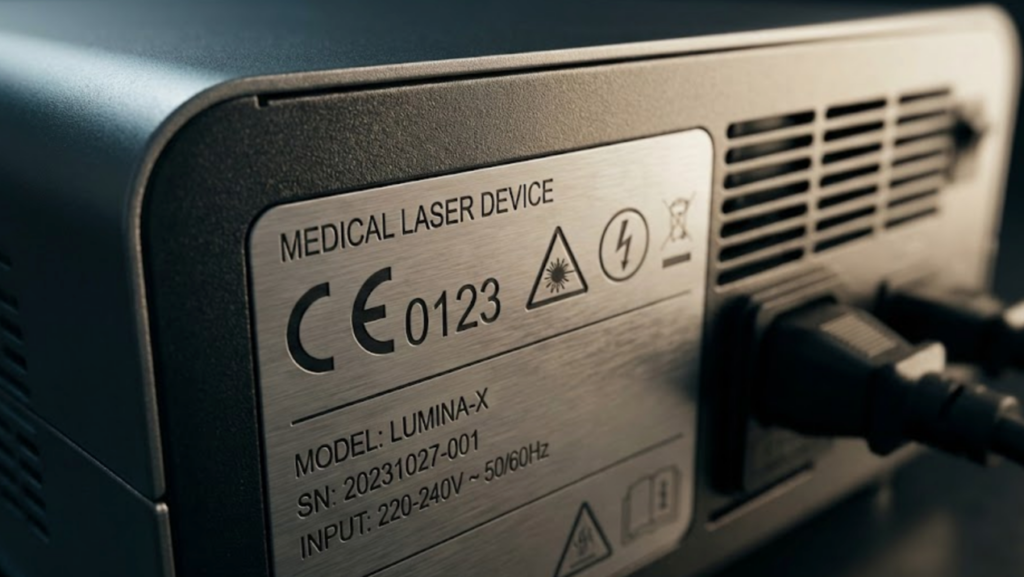
Certification Requirements for Laser Devices
Possessing a certificate is one thing; understanding the technical safety behind it is another.
Electrical Safety, Performance, and Medical Classification
A compliant laser must have precise monitoring systems. According to safety standards, the device must include a monitor to indicate the preset output of the working beam. Crucially, the deviation between the actual laser output and the preset value cannot exceed ±20%.
Furthermore, risk management is key. At Heshibi, we integrate advanced cooling technologies—specifically Compressor Cooling or TEC (Thermo-Electric Cooling) systems—into our devices. This ensures that while we deliver high energy for effective hair removal, the skin is protected from thermal injury, meeting the essential performance requirements for medical safety.
Documentation Clinics Should Request from Suppliers
When sourcing an OEM/ODM device, never settle for just a sales pitch. You should demand:
- Proof of Certification: Copies of the FDA 510(k) letter or CE certificate.
- User Manuals & Training: Comprehensive guides on safety protocols.
- Warranty Terms: A compliant manufacturer stands behind their build quality. (For example, Heshibi offers a 5-year warranty and a policy of free machine replacement within the first year).
How to Verify Device Legitimacy
1. Checking Certification Databases
Don’t take a manufacturer’s word for it—verify it.
- For US-bound devices, use the FDA’s 510(k) Premarket Notification database.
- For EU devices, verify the Notified Body number next to the CE mark against the NANDO database.
2. Red Flags in Non-Compliant or Counterfeit Devices
Be vigilant against counterfeit devices. A major red flag is terminology. If a supplier aggressively markets a standard diode laser as “FDA Approved” rather than “FDA Cleared,” proceed with caution. Additionally, look for inconsistencies in technical specs (e.g., impossible energy outputs) or a lack of serial numbers, which often signal “grey market” or unsafe equipment.
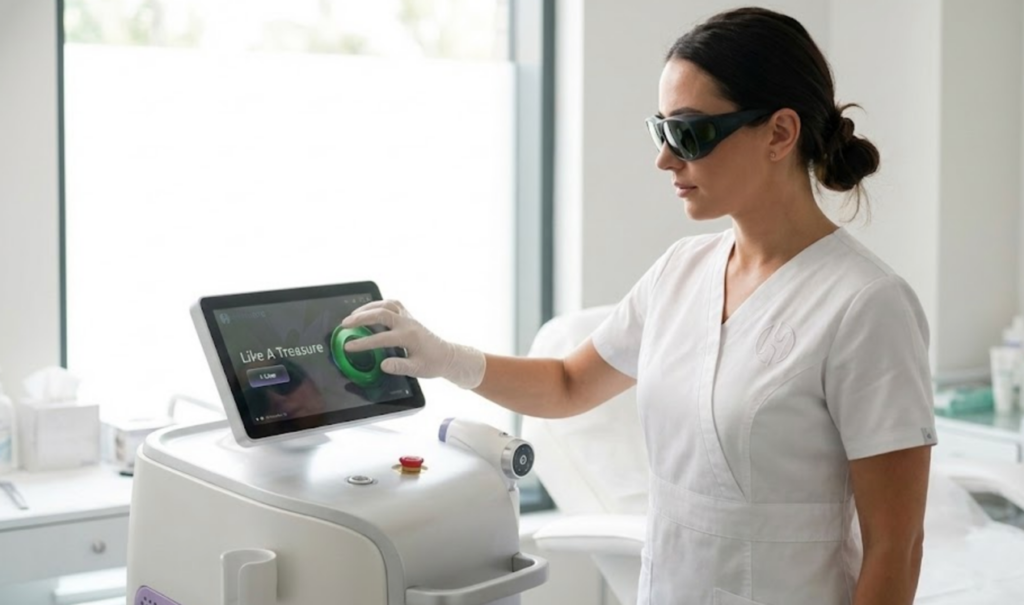
Heshibi-Tech’s Compliance and Global Standards
At Heshibi Tech, we believe that high quality is the only way to sustain a business. We position ourselves not just as a manufacturer, but as a compliance partner for beauty clinics.
Our flagship diode laser hair removal machines—DioGemini, DioTreasure, and DioFlex—are engineered to meet the highest global standards. They hold both CE and FDA certifications, ensuring that whether you are operating in Berlin or Boston, your equipment is recognized as safe and effective.
Quality Assurance and Post-Market Service
We pair compliance with durability and support:
- Technical Excellence: Our devices feature multi-wavelength options (755nm, 808nm, 940nm, 1064nm) to treat all skin types safely. The handpieces are built for longevity, rated for 10 million to 20 million shots.
- Unmatched Support: We understand that downtime costs money. That is why we provide 24/7 technical support, OEM/ODM customization (software, language, chassis color), and a robust warranty program: 5-year warranty on the main unit and free replacement within the first year if major issues arise.
Final Thoughts
Choosing the right equipment is about more than specifications; it is about sleep-well-at-night security. By prioritizing laser hair removal regulations, you build a clinic on a solid foundation.
Are you looking for a fully compliant, high-performance laser solution for your clinic? Contact the Heshibi Tech team today to discuss our FDA and CE-certified OEM/ODM options.