
In our industry, the conversation around hair removal has evolved. Clients and practitioners no longer ask if light-based hair removal works—its efficacy is well-established. The critical question now is about the underlying physics: which specific hair removal technology offers the optimal combination of safety, efficiency, and versatility for a professional practice?
This is a technical breakdown to clarify the science, compare the core mechanisms of different laser types, and explain why certain engineering choices are fundamental to achieving superior results.

The Fundamental Engineering Problem: Surface vs. Root
Before we even talk about lasers, we need to be clear about the fundamental difference in approach. All methods fall into two engineering categories:
- Depilation:This is a surface-level fix. Think of shaving or depilatory creams. They simply cut the hair shaft at the skin’s surface. The result is fleeting, lasting only a day or two, and often causes irritation. From a technical standpoint, it’s an inefficient, short-term solution.
- Epilation:This is a root-level approach. The goal is to remove the entire hair structure, including the bulb and follicle. Traditional methods like waxing or sugaring do this mechanically. They offer longer-lasting results than shaving, but the process is painful and must be repeated endlessly. It doesn’t solve the problem of regrowth.
For a truly long-term solution, we must look to technologies that can systematically disable the hair growth mechanism at its source. This is where light-based technology enters the picture.
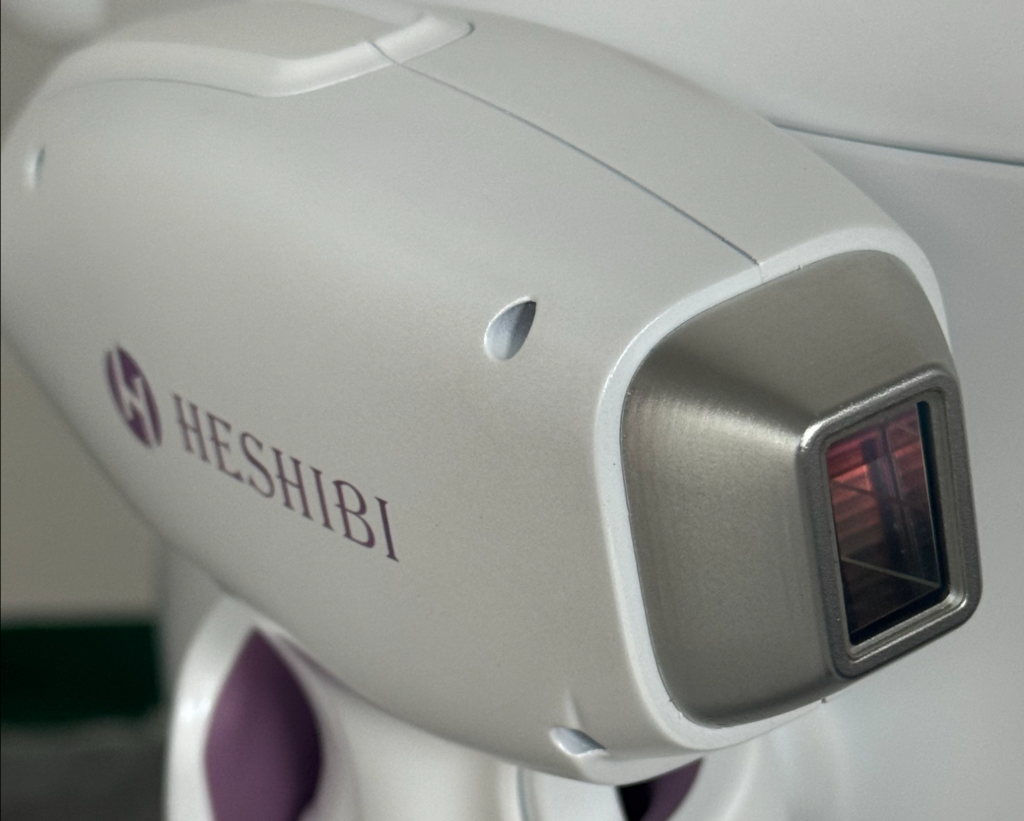
The Physics of Light: How Modern Hair Removal Works
The breakthrough that underpins all modern laser hair removal is a principle called Selective Photothermolysis (SPTL).
Think of it this way: SPTL allows us to deliver a highly targeted thermal impact, like a sniper, instead of a shotgun blast. We use a specific wavelength of light that is strongly absorbed by the melanin (pigment) in the hair follicle. This light energy instantly converts to heat, damaging the follicle and preventing future growth, while leaving the surrounding skin unharmed.
The success of this “mission” depends on a critical triad of parameters:
- Wavelength (nm): Determines how deep the laser penetrates and how effectively it’s absorbed by the target (melanin).
- Pulse Duration (ms): The precise amount of time the laser energy is applied to sufficiently heat the follicle without overheating the skin.
- Fluence (J/cm²): The amount of energy delivered.
Different types of laser hair removal are simply different tools engineered with specific wavelengths to solve different problems.
- IPL (Intense Pulsed Light): Let’s be very clear: IPL is not a laser. It uses a broad spectrum of light, like a flash lamp with filters. This scattered energy is far less efficient and precise than a laser’s focused beam. For hair removal, it’s a blunt instrument that carries a high risk of burning darker skin types.
- Alexandrite Laser (755nm):T his wavelength is a sprinter. It’s incredibly fast and powerful due to its high melanin absorption rate. This makes it extremely effective on fair skin (Fitzpatrick I-III) with dark hair. However, for the same reason, it’s a high-risk tool for darker skin, often causing pigmentation issues.
- Nd: YAG Laser (1064nm): This is the deep diver. Its longer wavelength is less readily absorbed by melanin in the epidermis, allowing it to bypass the surface and penetrate deeper to target the follicle. This makes it the safest option for dark and tanned skin (Fitzpatrick V-VI).
- Diode Laser (808nm) : For years, the 808nm Diode has been considered the industry’s “gold standard,” and for good reason. It represents the optimal engineering compromise—achieving deep penetration while maintaining a strong affinity for melanin. This makes it a powerful and versatile workhorse, safe for all skin types (I-VI) and clinically proven to achieve permanent hair reduction of up to 95%.
An Engineer’s Note on Cooling
The cooling system is just as crucial as the laser itself. The principle of advanced diode hair removal technology is to protect the skin while the laser does its work. Without exceptional cooling, clients are forced to lower the energy (fluence) to avoid burns, which compromises results.
High-performance systems use a combination of thermoelectric coolers (TEC) and sapphire contact heads. Sapphire is an incredible material with high thermal conductivity, allowing it to rapidly draw heat away from the skin. Some of the most robust systems, like GSD’s, can instantly drop the treatment tip to -5°C, providing dynamic protection and making the treatment virtually painless. This isn’t a luxury feature; it’s an essential component for safe, effective, and comfortable treatments.
The Data: A Head-to-Head Comparison
To strip away the jargon, here is a direct comparison based on performance metrics.
Feature | Diode Laser | Alexandrite Laser | Nd:YAG Laser | IPL | Traditional Methods (Shaving/Waxing) |
Permanence | High (up to 95% permanent reduction) | High | High | Low/Medium (inconsistent results) | Temporary (1 day to 4 weeks) |
Suitable Skin Types | Safe & effective for all (I–VI) | I–III; High risk for IV–VI | IV–VI safest | I–III (with caution); High risk for dark skin | All |
Pain Level | Minimal/painless (with advanced cooling) | Higher | Higher | Higher | Shaving: Minimal; Waxing: High |
Efficiency | Fast, high repetition rate (up to 20Hz) & large spots | Very Fast | Slower | Slower | Slow (requires constant repetition) |
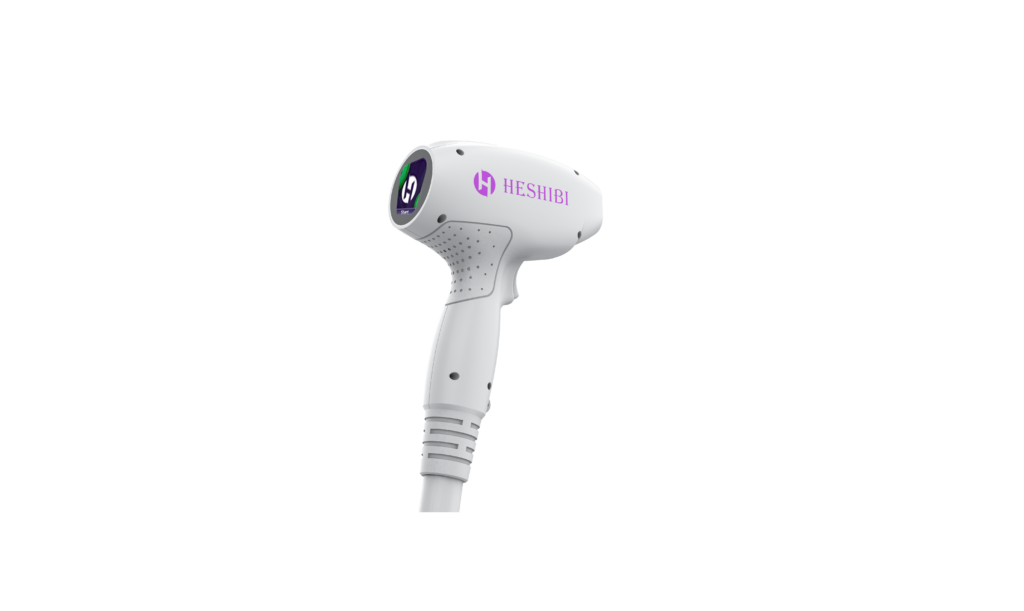
Why We Build Our Machines the Way We Do
This brings me to our work at Heshibi Tech. Our design philosophy is born from this technical understanding. We aren’t just assembling parts; we are engineering solutions to the challenges I’ve outlined.
We named our company after the legendary “Heshi Bi,” a priceless piece of jade, because we see our machines as treasures built on a foundation of uncompromised quality.
- Versatility is Key: We know that a professional clinic sees a diverse range of clients. That’s why we don’t lock you into a single wavelength. Our machines offer selectable configurations of 755nm, 808nm, 940nm, and 1064nm, allowing you to choose the perfect tool for every client. Our DioTreasure model integrates all four into a single handpiece.
- We Are Obsessed with Cooling: As I mentioned, cooling is non-negotiable. We integrate high-performance TEC and compressor cooling systems to ensure our machines can run all day with consistent, safe, and comfortable performance for your clients.
- Reliability Underpins Everything: In a professional setting, downtime is costly. We build our machines for longevity. That’s why we use core components like laser bars from Coherent, a top-tier US manufacturer, rated for over 20 million shots. It’s why our machines are CE and FDA certified and backed by a 5-year warranty.
- Efficiency for Your Business:T ime is money. Features like a 20Hz pulse speed and large, interchangeable spot sizes (like on our DioFlex model) are engineered to drastically reduce treatment times without sacrificing results.
Conclusion
So, what is the final verdict for a professional seeking the best hair removal technology?
For maximum safety, efficacy, and versatility across the widest range of clients—especially for Asian and other darker skin types—the data and my experience point overwhelmingly to Diode and Nd: YAG lasers. A high-quality Diode laser system, with its excellent balance of power, depth, and safety, remains the most robust and intelligent investment for a modern aesthetic business.
If you share our passion for the technology behind the results and want to discuss how these principles can be applied to grow your business, feel free to reach out. We are always ready for a technical conversation.